A bleak yet poignant glimpse into the world of women trapped in feudal patriarchy
Introduction
The Netflix series titled Kohrra in its first season was a brilliantly written and directed narrative exploring the world of men and their angst when it comes to the themes of love, sexuality, class conflict, rage, and violence. Embedded in the state of Punjab, the first season leverages strands of feudalism, land disputes, the lure of migration to the west, rising drug abuse et al that imbue a small town as the backdrop or the gestalt and offers an array of stories around men in the foreground who struggle with themselves.
While many would like to label this series as a murder mystery or a whodunnit — the narrative is crafted with sensitivity and honesty while delving into complex themes. I was left very moved by this season and wrote a blog on Kohhra Season 1. I must also state that I am an admirer of the works of Sudip Sharma and have written about his other works including Udtaa Punjab and Pataal Lok.
When Kohrra 2 was released a few weeks ago, I was hesitant and tentative about watching it — sequels never do justice and yet Pataal Lok 2 by Sudip Sharma had been an exception too. In Pataal Lok 2, the narrative allows for maturation and evolution of its characters and yet maintained a rawness in its enquiry of what may be happening in modern India.
The final trigger to watch Kohhra 2 came from Makarand S — a friend whose tastes in literature and cinema are trustworthy, and who exhorted me to watch it.
The Beginning
Kohrra 2 makes a humble if not a staid and familiar beginning — it has a certain deja-vu quality around it in the first couple of episodes. I mentally ticked the following boxes, as I saw certain signature themes of its creators and their penchant for narratives. Some of these common themes included:
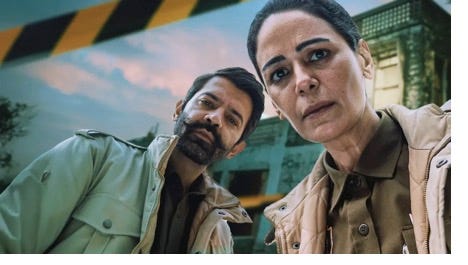
a) A conflicted investigating officer who reluctantly takes on the case. This time it happens to be a woman detective — Dhanwant Kaur, played by Mona Singh. Dhanwant carries a poise in her suffering, as she manages an alcoholic husband while burdened with the grief of a child, and yet wanting another.
b) There are the usual near-comic errors and mistakes by her colleague — Amarpal Garundi — a loveable and intense character from the first season, and who brings in a continuity of the original gestalt or the canvass behind the Kohrra series.
c) The usual suspects include young men and women mimicking the west and wanting to be powerful influencers. Like Kohrra Season 1, there is a desperate wish to break free from the shackles and captivity of small-town society in Punjab.
d) There are the usual references to land, caste and class wars, and bureaucracy of the policing system.
e) The language remains an earthy Punjabi — replete with rawness, vulgarity, and blatant honesty — very different from the language I learnt from my parents.
f) The brutal battering and dismembering of the two lead investigators are quite a tribute to Joseph Campbell’s 8th and 9th stage of the Hero’s Journey — that of Apostasis and Boon. This was true for the first season.
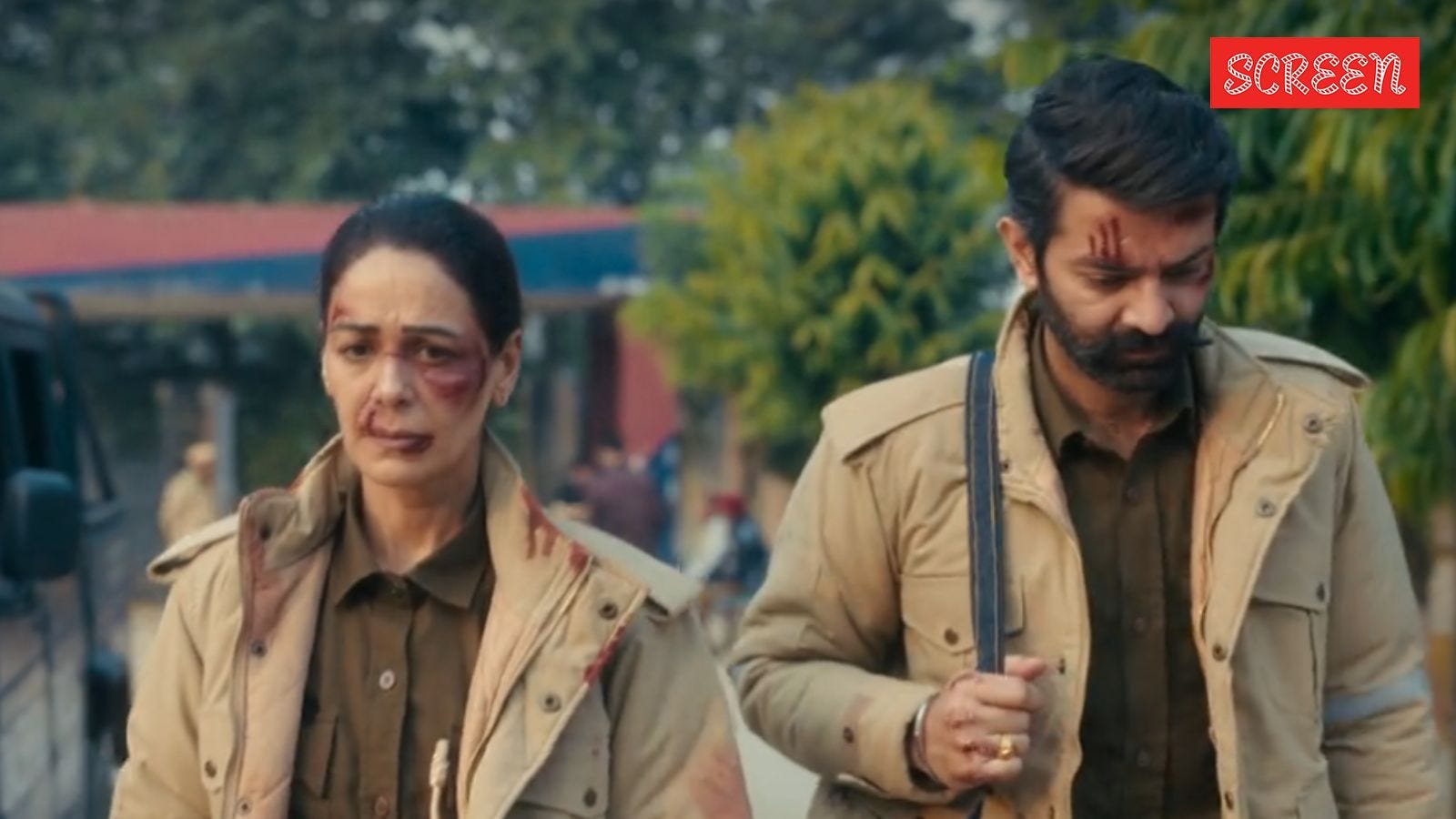
And yet, the second season succeeds in surprising if not shocking the viewer with not just creative plot twists, but with deeper strokes on the nature of conflicts and legacies that taint the vignette of small-town societies in Punjab, if not representing the rest of the country. The predictable narrative after episode 2 becomes engrossingly unpredictable and the initial stereotyped cast demonstrates acuity and depth as the plot thickens.
Theme 1
Feudal Agrarian Societies, Captivity, and Modern Slavery
Most outsiders to Punjab, within India and abroad, often associate the land, its people, and its culture with energy and intensity, men and women who swing to the bhangra beats with a rhythmic ease, who live life large, who are hardworking, authentic, cheerful, spontaneous and of course a little more hedonistic than most others.
These associations are a part of historical narrative of Punjab — a land that historically has been one of the wealthier societies in the period of the sixties and the seventies, having witnessed the green revolution and then had to engage with terrorism in the 1980s, as well as large scale migration to the west in the last three decades.
What gets never spoken of is the subaltern history of bonded labor — an abominable and ugly truth that many believed to belong to the past — but the nightmarish realities still come up even today. Though the year 1976 saw the passing of the Bonded Labor System Abolition Act that sought to ban the practice of modern slavery, there are instances of how bonded labor still exists today.
While most of us praise the Green Revolution — the surge in agricultural productivity also meant a surge in demand for labor from UP and Bihar — many of them who fell into debt trap and bonded labor. By the end of the 20th century, estimates suggested that the number of bonded labors were assumed to run in hundreds of thousands — many who were either employed in brick-kilns or with burgeoning dairy. Most of them are from the Dalit community.
The region of Malwa in Punjab (south of Sutlej and north of Ghaggar) including the districts of Ludhiana, Bathinda, Sangrur, Moga and Ferozepur — also known as the cotton belt of Punjab has been notorious for this practice.
I am attaching a summary of rescue operations in the past 5 years that have made news on this front.


Kohrra 2 picks this strand of bonded labor in its narrative — the writers do not shy away from depicting this abominable reality with its repugnance and yet reveal how this practice has been normalized in the lives of the wealthy landed class in Punjab. This is a courageous stance as the practice of bonded labor has been denied by the state governments comprising of all parties.
Theme 2
Feudal Patriarchy and the Captivity of Women
What differentiates the sequel from the first season is that the narrative speaks of psychological captivity of its women characters, and how each of them struggles to break free. It is not the bonded Dalit that is a victim of feudal patriarchy.
As is the case with most patriarchal societies — it is that both men and women suffer under the patriarch. The men feel castrated and submit and the women are held captive.
All the women characters — be it the murdered woman, or Garundi’s wife — Silky, or Dhanwant Kaur etc., bring in their struggles with feudal societies with grace, dignity, and sometimes violent aplomb.
· Preet Bajwa — the woman who wishes to rebel and challenge the patriarchy — by mimicking the men, their power and their privileges, gets murdered.
· Garundi’s wife — Silky offers honesty and vulnerability to her husband and yet finds herself alone as Garundi is unable to work with his shame, cowardice, and collusion.
· Garundi’s sister-in-law Rajji bears her pregnancy alone — both her husband and Garundi shun her as she stoically gathers herself for the birth of the baby.
· But it is Dhanwant Kaur whose isolation and aloneness is gut wrenching. Dhanwant remains captive to her role of the caring wife — to bear the cross by looking after her insensitive cowardly and narcissistic husband who wishes to drink himself to death out of guilt.
The men in Kohrra 2 are either embedded in debauchery, vengeance, and violence of power-politics or burdened with their guilt, shame and cowardice and Kohrra-2 does not allow them to escape easily into the grey mist.
Conclusion
If you were to watch Kohraa-2, you must watch the first season. Both the seasons use the state of Punjab as an interesting canvass for their narratives. The language is not far away from Hindi — and the narrative offers a fine balance between distance and contiguity — its accessibility makes the themes familiar and intense, and yet the distance allows the safety to work with these themes with oneself.
Lastly, I would like to applaud the cast of actors who made both seasons worth watching and the co-creators — Sudip Sharma, Faisal Rehman, Gundip Chopra and Diggi Sisodia.
 Incorrigibly romantic ...
Dear Gagan,
I was eagerly waiting for IC’s sequel blog entry on Kohrra 2. The pleasure of watching a great cinematic piece is considerably enhanced by reading an insightful review of it.
I am one of the lopsided viewers who like to read reviews even as after they have seen the film/series.
I agree with almost everything you say except that the lead investigator takes on the case unwillingly. I sensed she was hungry for redemption after having been put in the dog house professionally since her personal tragedy.
I also liked the fact two of the husbands – Dhanwant’s and Preet’s are offered some semblance of redemption. Sam prioritises the care of his daughters over his own loneliness by rejecting an easy dalliance with the nanny; and Dhanwant’s husband’s trauma is shown to be as intense as his wife’s. It was good to see decency celebrated wherever we find it.
I would love for you to read Amitabha Bagchi’s Unknown City. I respect his writing, in which I see an alert imitation of Ohran Pamuk’s The Museum of Innocence but I can’t shake off the self-indulgence that comes off at the same time.
Un abrazo fuerte, Java
Member Board of Studies, Department of Spanish, VIT Empanelled faculty, MA (Spanish), IGNOU
Books: Feministische Literatur- und Kulturkritik, Springer, 2025 https://link.springer.com/book/10.1007/978-981-97-1689-0 Feminist Literary and Cultural Criticism, Springer, 2022. https://link.springer.com/book/10.1007/978-981-19-1426-3 Gendered Ways https://www.amazon.in/Transnational-Belonging-Comparative-Literature-Perspective/dp/1527530566
Posthumanist Nomadisms https://www.amazon.in/Posthumanist-Nomadisms-Non-Oedipal-Spatiality-Anthropology/dp/1648891136/ref=sr_1_1?crid=24JCB9GE1T1R9&keywords=posthumanist+nomadism&qid=1642680274&s=books&sprefix=posthumanist+nomadism%2Cstripbooks%2C230&sr=1-1
ORCID ID: 0000-0002-8342-7805
LikeLike